
Last updated November 25, 2026
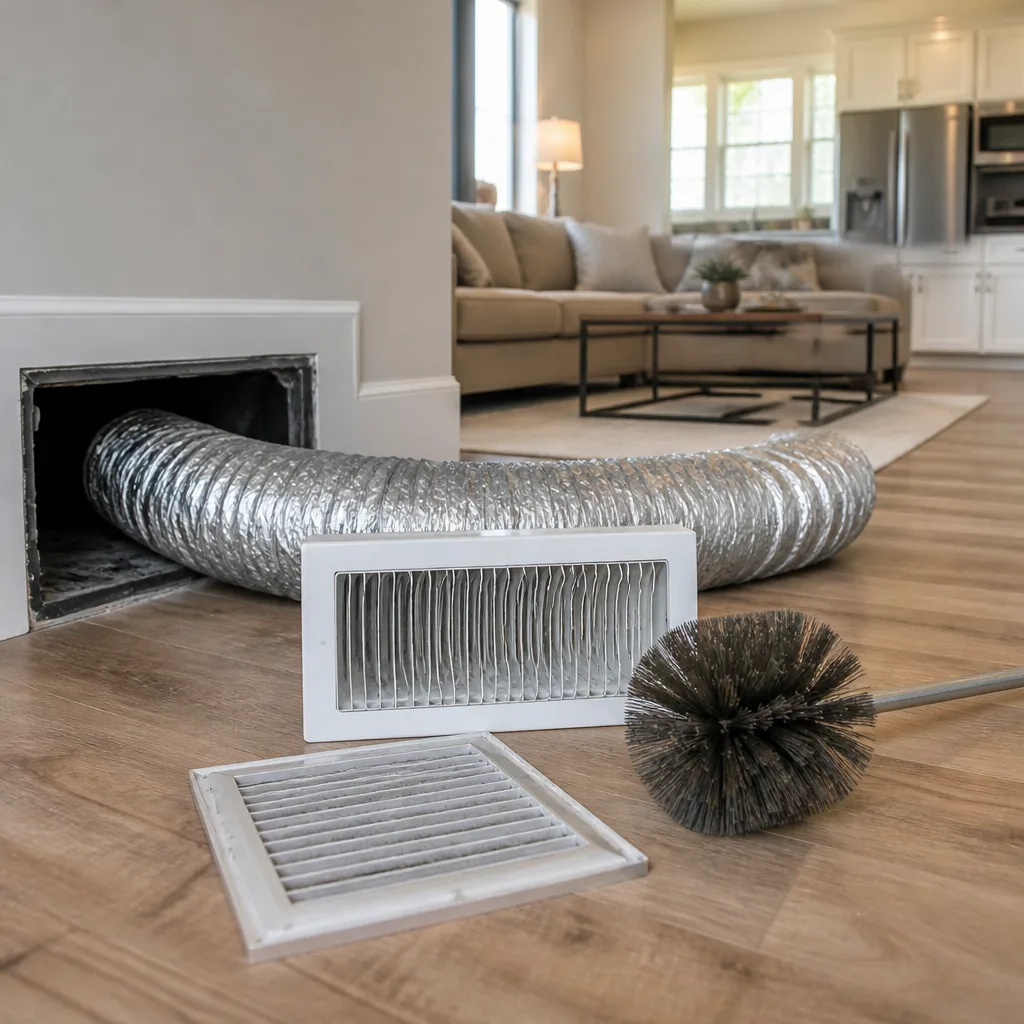 Whole-home duct cleaning
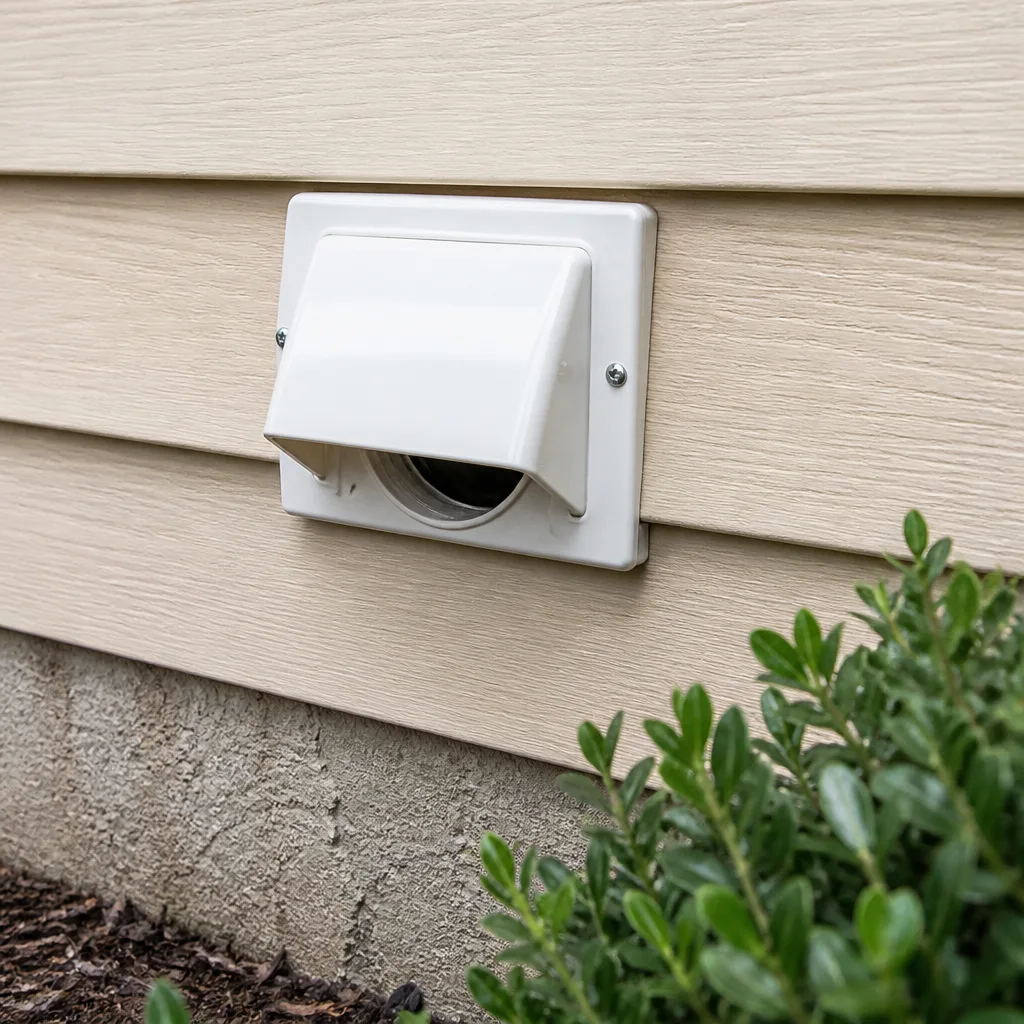 Dryer vent cleaning
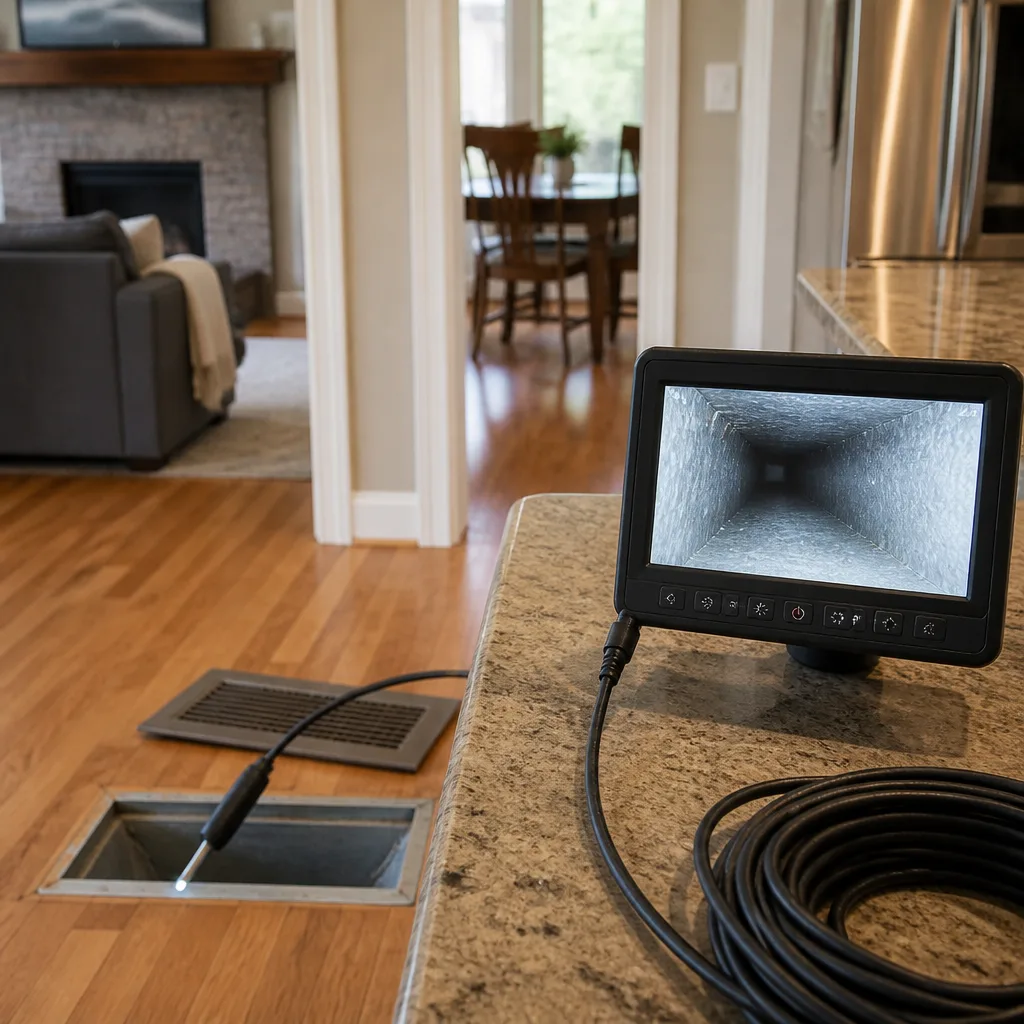 Camera inspection
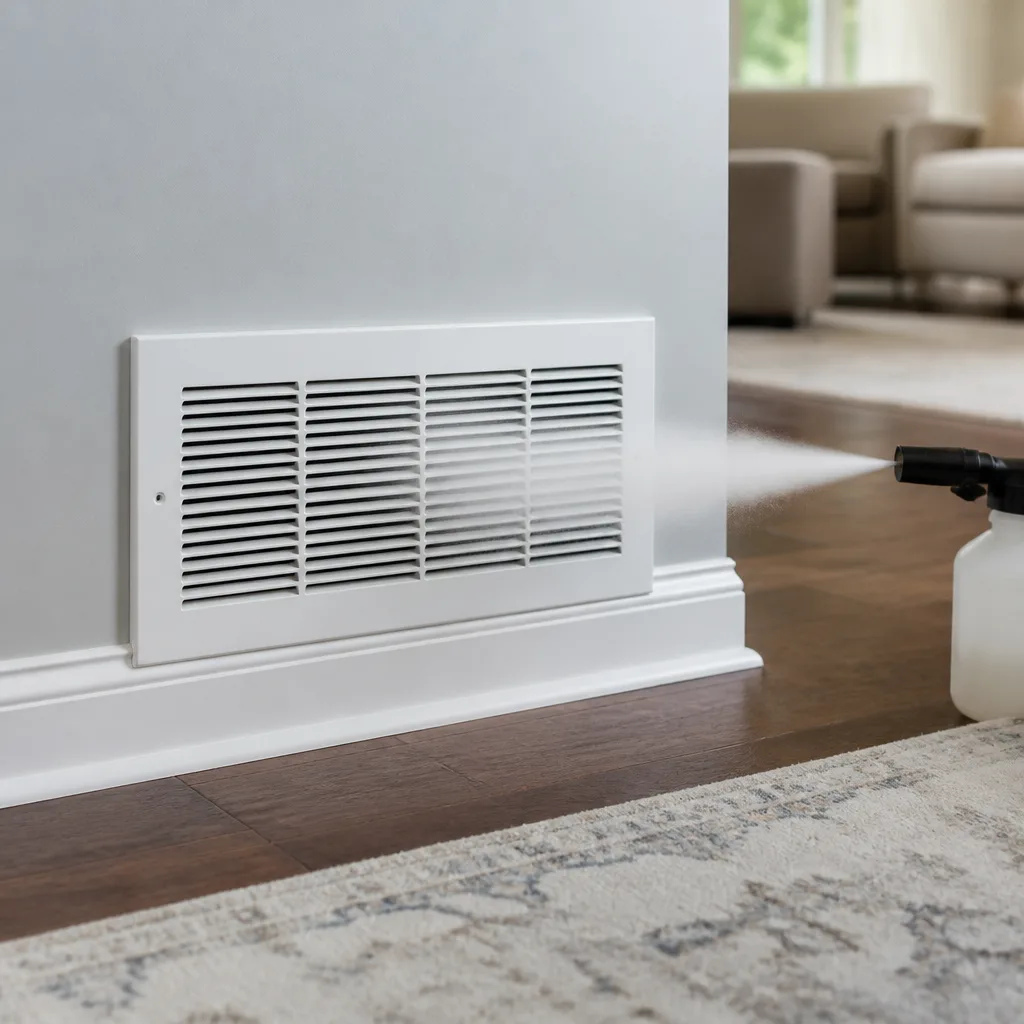 Sanitizing & deodorizing
Whole-system duct and dryer vent check with before-and-after photos - you see exactly what came out of your vents
That "$99 whole-house special" is a bait ad - the real number appears once they are in your hallway, or the "clean" is a shop-vac at the register. We photograph the inside of your ducts before and after instead.
Air Duct Cleaning Emergency Preparedness Guide for Kirkland Homes
Most homeowners treat air duct cleaning as routine housekeeping, something to schedule when the vents look dusty. The truth is that the worst duct contamination in Kirkland doesn’t come from ordinary dust. It arrives in a single afternoon: a smoke plume from a wildfire, a burst pipe that soaks the crawlspace, or a windstorm that drops the grid for three days. Each of those events pushes a different kind of debris into your forced-air system, and what you do in the first 48 hours decides whether recovery is a scheduled cleaning or a reconstruction project. This guide walks through each emergency type, what to do right away, what to save for a professional, and how to prepare your system before the next event arrives.
Quick Answer
After a wildfire smoke event, flooding, or extended power outage in Kirkland, the most important step is to shut the HVAC system off and seal the return-air intakes before more contamination enters the ductwork. From there, each emergency has its own protocol: smoke events need filtration and a post-event cleaning, floods need inspection within 48 to 72 hours to stop mold colonization, and outages need a system check before you resume normal operation. Document everything with photos for insurance, and call a professional who can inspect, repair, and sanitize the whole system rather than just vacuuming the visible registers.
Styles & brands we work with
- Whole-home duct cleaning
- Dryer vent cleaning
- Camera inspection
- Sanitizing & deodorizing
Table of Contents
- Wildfire Smoke Events: What to Do in the First 48 Hours
- Post-Flood Duct Protocol: The 48-to-72-Hour Window
- After a Power Outage: Inspect Before You Run the System
- Documenting Duct Condition for Insurance Claims
- Pre-Event Preparation That Lowers Your Recovery Cost
- Filter Upgrades and Return-Air Sealing
- When to Bring in a Professional
- Common Mistakes to Avoid
Wildfire Smoke Events: What to Do in the First 48 Hours
Wildfire smoke is the emergency most Kirkland homeowners have already lived through, and it’s the one most people handle wrong. During a smoke event, a forced-air system doesn’t just sit there with smoke in the air around it. It actively pulls smoke into the ductwork through every gap it can find: loose return-air joints, unsealed plenum connections, and thin filters that catch some particulates and let the rest through. The system becomes a distribution network for exactly the air you’re trying to keep out.
Here’s the counterintuitive part: the instinct to keep the fan running for “circulation” is often the wrong move. Running the system during heavy smoke drives contaminated air through the ducts and pushes fine particles into every room, and much of that contamination settles inside the ductwork where the next cycle keeps stirring it back up.
Immediate steps during a smoke event
- Turn the HVAC system off entirely. This stops the system from drawing smoke through return-air gaps and circulating it into rooms.
- Seal return-air intakes with a clean, slightly damp towel or painter’s tape and plastic film if smoke is actively infiltrating. Pull the seal once the smoke event ends.
- Close windows and exterior doors, and block the gap under exterior doors with a rolled towel.
- If you must run the system with a very high-efficiency filter already installed, do so only briefly and check the filter for loading afterward. Never run a thin, low-efficiency filter during a smoke event and assume it’s protecting you.
- Note the dates of the smoke event and photograph your filters before and after. This record matters later for insurance and for knowing when the system needs professional cleaning.
Once the smoke clears, don’t simply resume normal operation and forget it. Fine smoke residue lodges in duct lining, on register grilles, and inside the air handler, and a routine filter change doesn’t remove it. That’s when a full-system air duct cleaning with HEPA equipment is the right answer, not a vacuum pass over the registers. Professional-grade extraction at the source is what actually removes settled smoke residue rather than redistributing it.
Post-Flood Duct Protocol: The 48-to-72-Hour Window
Flooding in Kirkland rarely looks like a river over the banks. It’s more often a failed supply line, an overflowing sump, or a heavy rain event that finds a crawlspace or a low return trunk. When water reaches ductwork, the clock starts immediately: mold can begin colonizing damp duct lining and insulation within 48 to 72 hours. That’s the hard constraint this section is built around, and it’s why flood-related duct damage is a different category of emergency than a dust problem.
What to do if your ducts got wet
- Shut the HVAC system off before it can blow moisture and spores through the house.
- Photograph the water line on ductwork, insulation, and the air handler before you remove or dry anything.
- Remove standing water and start drying the surrounding space with fans and dehumidifiers if it’s safe to do so.
- Do not run the system to “dry it out.” Airflow through wet ductwork spreads contamination into rooms that were never wet.
- Call a professional for inspection and moisture assessment. Duct lining and insulated flex duct that have been wet often can’t be dried in place and need replacement rather than cleaning.
This is where a clean-only company runs out of answers. We inspect, and we repair what we find: failed connections, sagging or disconnected sections, and water-damaged runs that need to come out. A full-system scope means the same provider can inspect, seal, repair, clean, and sanitize, with no handoff gap between the diagnosis and the fix. For flood recovery specifically, that continuity matters, because a disconnected duct found during inspection is also a contamination entry point during cleaning.
After a Power Outage: Inspect Before You Run the System
Winter storms knock out power in Kirkland with some regularity, and when the grid comes back the first thing most people do is crank the heat. That’s understandable, and it’s also the moment a hidden problem gets pushed through the whole house. A long outage creates conditions inside ductwork that don’t exist during normal operation: condensation from temperature swings, and, in some homes, rodents or insects that move into warm, dark duct runs when the system goes quiet.
What to check before resuming normal operation
- Listen at the registers. Rattling, ticking, or a sudden drop in airflow can signal a displaced section or debris that shifted during the outage.
- Smell the first cycle. A musty or sharp odor that wasn’t there before the outage suggests moisture or pest activity inside the system.
- Check for pest evidence around exterior penetrations, the air handler, and any duct runs in the crawlspace or attic. Droppings, nesting material, or chewed insulation are reasons to stop and call before running the system.
- Replace the filter before the first long run, and check it again after a few days.
- Watch for uneven heating. If some rooms warm normally and others don’t, a duct section may have separated or shifted during the outage.
Debris displacement and pest infiltration are the two failure modes that most often follow an outage, and both are invisible from the register grille. If anything seems off, get an inspection before you run the system for extended periods. Resuming operation on a compromised system just pushes whatever is inside the ducts into the living space.
Documenting Duct Condition for Insurance Claims
Insurance adjusters work from evidence, and duct contamination is one of the hardest parts of a home claim to prove after the fact. Smoke residue, moisture damage, and pest infiltration all become harder to attribute once the system has run for a few weeks. The homeowners who get claims resolved cleanly are the ones who documented the system before anyone touched it.
What adjusters typically need from you
- Dated photographs of the event’s impact on the home: smoke haze inside, water lines on ductwork or insulation, downed trees, or the aftermath of the outage. Date-stamped photos are worth more than undated ones.
- Photos of the filter before and after any event, plus the filter’s MERV rating if it’s printed on the packaging.
- Photos inside the registers and returns if you can safely remove a grille. Do not open the air handler or any sealed duct section yourself.
- A written record of when the system was shut off and when it resumed. A simple dated note is enough.
- A professional inspection report or estimate documenting what was found and what remediation requires. Clear scope and pricing from a written estimate carries much more weight than a verbal opinion.
- Receipts for any filters, dehumidifiers, or temporary mitigation you purchased.
We can provide before-and-after photos of your own ducts as part of the work, which gives you documentation of the system’s condition rather than a generic description. If you’ve had a smoke, flood, or storm event and are filing a claim, ask for the inspection findings in writing. That’s the record your adjuster will want.
Pre-Event Preparation That Lowers Your Recovery Cost
The most effective emergency response happens before the emergency. A duct system that’s well-sealed, well-filtered, and easy to shut down in stages recovers faster and cheaper from smoke, water, and outages than one that’s full of gaps and running on bargain filters. Think of preparation as reducing the amount of contamination that gets in, not just making cleanup easier after.
The pre-event checklist
- Seal the returns and the plenum. Loose return-air joints are the primary entry point for smoke and fine dust. Sealing them is one of the highest-value fixes a homeowner can make before fire season.
- Upgrade your filter to the highest MERV your system is rated for. Check the manufacturer’s rating first. Too high a restriction strains the blower; the right rating catches far more smoke and fine particulate.
- Know how to shut the system off at the thermostat and at the breaker. In a smoke or flood event, minutes matter, and you don’t want to be reading a manual while smoke comes in.
- Keep painter’s tape and plastic film on hand for sealing returns during a smoke event.
- Have the ducts inspected and cleaned on a sensible schedule so a pre-existing buildup doesn’t compound with post-event contamination.
- Add air-quality products that work with your system rather than against it. Honeywell and Aprilaire media cabinets and filtration upgrades are designed for this, and we’re authorized to recommend and install them.
If you’ve never had a full-system inspection, a pre-season visit is the moment to fix the gaps and disconnections that let smoke in. HEPA vacuum equipment like the Nikro systems we use during service captures dislodged contaminants at the source instead of scattering them, and that level of capture is what makes a post-event cleaning effective rather than cosmetic.
Filter Upgrades and Return-Air Sealing
Filters and return-air sealing are where most homeowner emergency plans fall apart, because they’re the two things that matter most during a smoke event and the two things most people get wrong. The filter is only as good as the seals around it. A high-MERV filter sitting in a slot with a half-inch gap at the frame lets unfiltered air bypass it entirely.
How to think about filtration
- Match MERV to your system’s rating. Higher isn’t automatically better if the blower can’t handle the restriction. Check the air handler’s documentation.
- Seal the filter frame. If you can see daylight around the filter, unfiltered air is getting past it. A gasket or a properly sized media cabinet fixes this.
- Choose a media cabinet over a thin slot filter if you’re serious about smoke protection. A media cabinet holds a deeper filter with more surface area and seals better against the frame.
- Replace on a schedule, and more often during smoke season. A loaded filter stops being a filter and starts being a restriction.
Return-air sealing ties in here. Every gap around the air handler, every loose joint in the return trunk, and every unsealed penetration is a place where smoke or outside air bypasses your filter. We seal those gaps during HVAC cleaning visits because a leaky return is the reason a good filter underperforms. For air filtration long term, Honeywell media cabinets and Aprilaire equipment give a system-level solution rather than a filter in a slot.
When to Bring in a Professional
Some things you can handle yourself, and some you shouldn’t. Turn the system off, seal the returns, document with photos, and call for help when the situation meets any of the criteria below. Don’t open the air handler or any sealed duct section yourself, and don’t run a system that has been wet, contaminated by smoke residue, or infiltrated by pests. Those are jobs for trained hands and professional-grade equipment.
- Water has touched ductwork or duct insulation at any point.
- You can smell smoke, mustiness, or pest activity when the system runs.
- The system has run during a heavy smoke event without a high-efficiency filter and seal.
- Airflow is uneven or there’s a rattle you can’t explain after an outage.
- You’re filing an insurance claim and need a documented inspection.
- The ducts haven’t been cleaned in years and you want a pre-season baseline.
Kirkland Air Duct Cleaning offers free estimates in Kirkland. Call (855) 812-5163. We answer 24/7. Fast dispatch from 7am to 7pm, Sunday through Friday. One flat price per system is agreed before work starts, and our technicians have up to 11 years of experience. The local pro we connect you with is licensed and insured as their state requires.
Common Mistakes to Avoid
- Running the fan during a smoke event to “circulate air.” That circulates smoke through every room. Shut the system off and seal the returns instead.
- Waiting for the ducts to dry out after a flood. Mold can begin colonizing damp duct lining within 48 to 72 hours. Get an inspection in that window, not after.
- Assuming a filter change is enough after a smoke event. Filters catch what passes through them. Smoke residue that settles inside ductwork stays there until it’s physically removed.
- Restarting the system after an outage without checking the airflow first. Displaced sections and pest activity are invisible from the thermostat, and one long run can push the problem through the whole house.
- Hiring a clean-only provider for a repair-and-remediation job. If your ducts have separated, disconnected, or been wet, you need someone who can repair and seal, not just vacuum.
- Taking photos only after cleanup starts. Adjusters want to see the damage as it happened, dated and unedited.
- Skipping the dryer vent in the emergency plan. Clogged dryer vents are a fire risk year-round, and they’re the one duct component most cleaners treat as an afterthought. Dryer vent cleaning belongs in any complete duct system plan.
See the difference
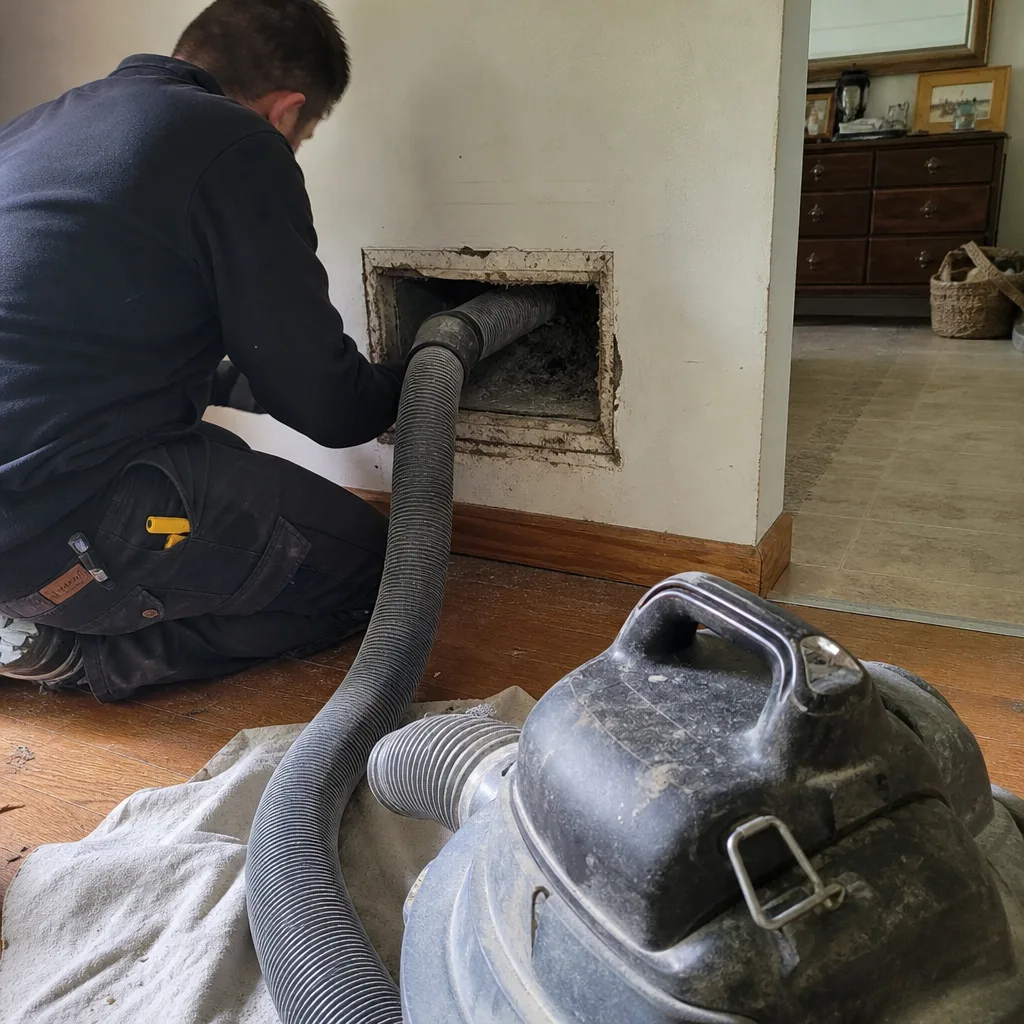 Before
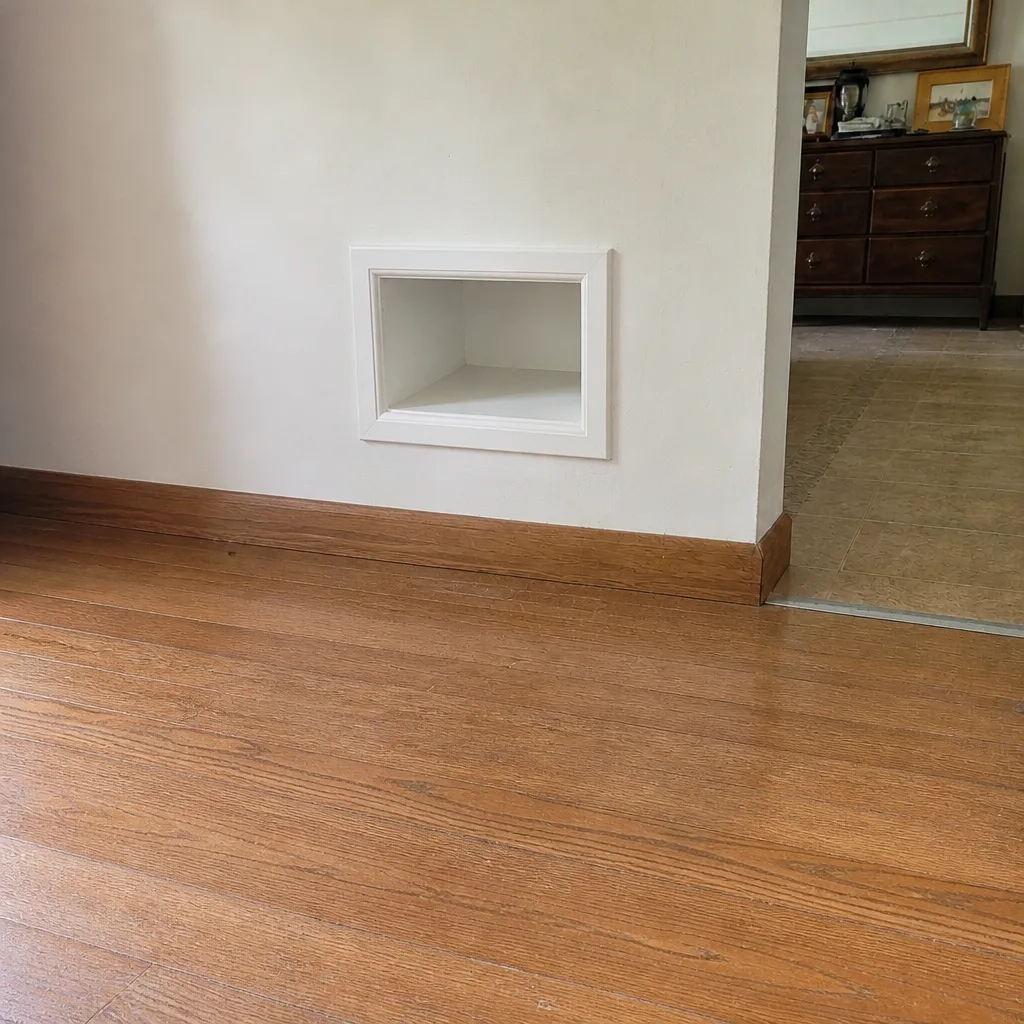 After
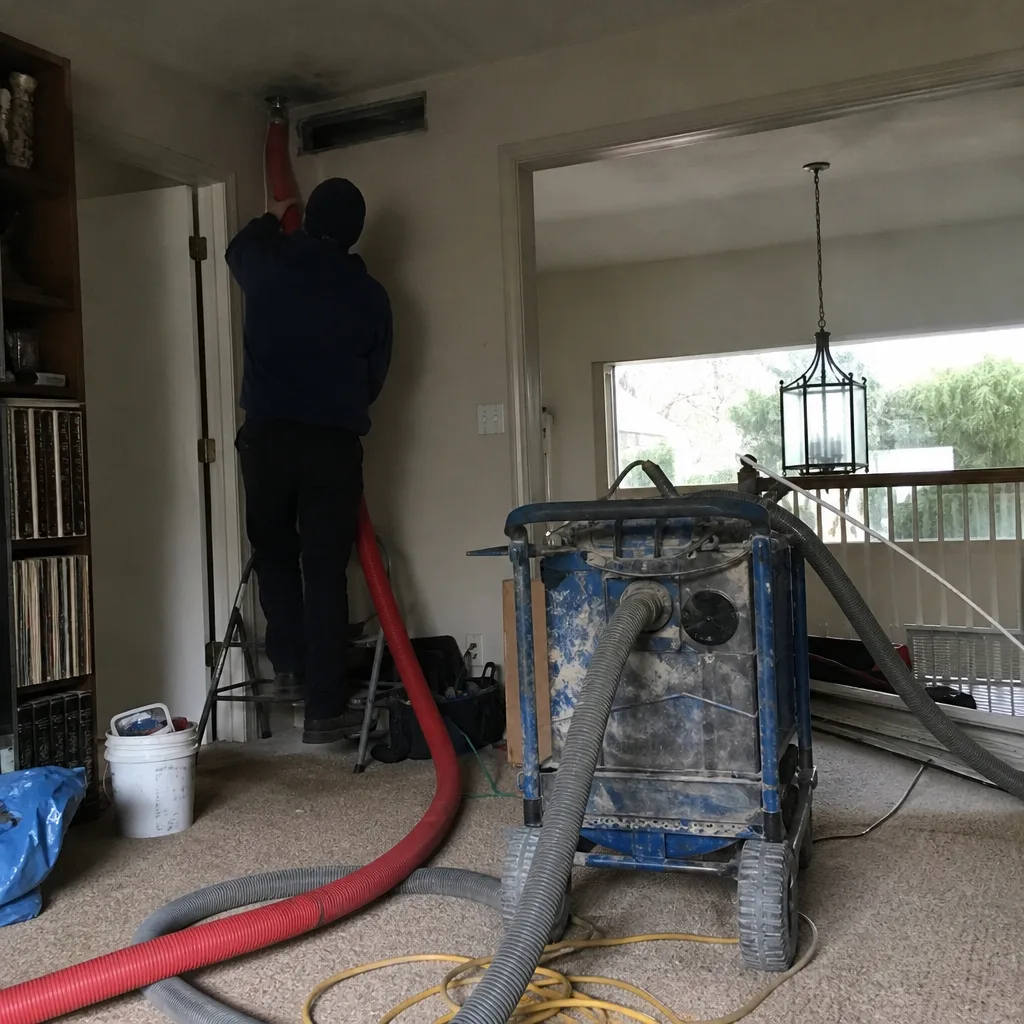 Before
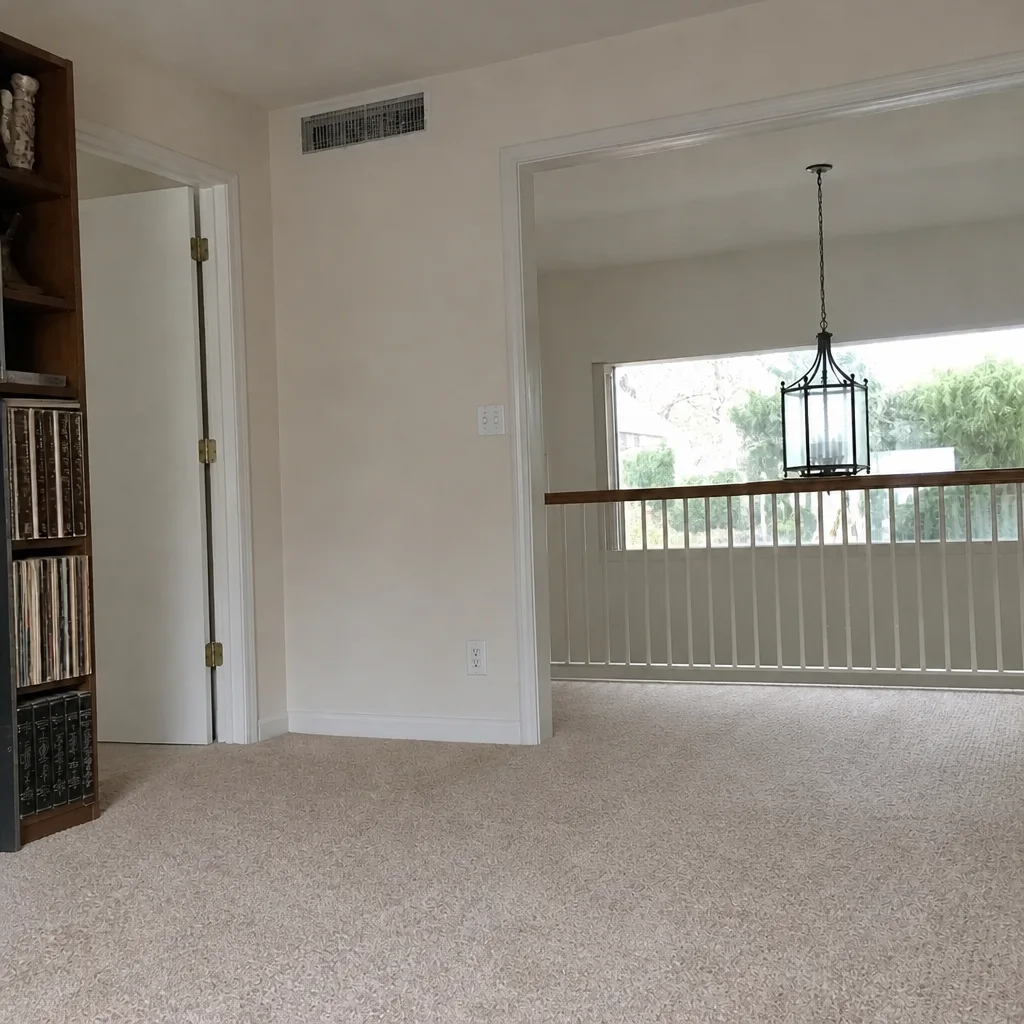 After
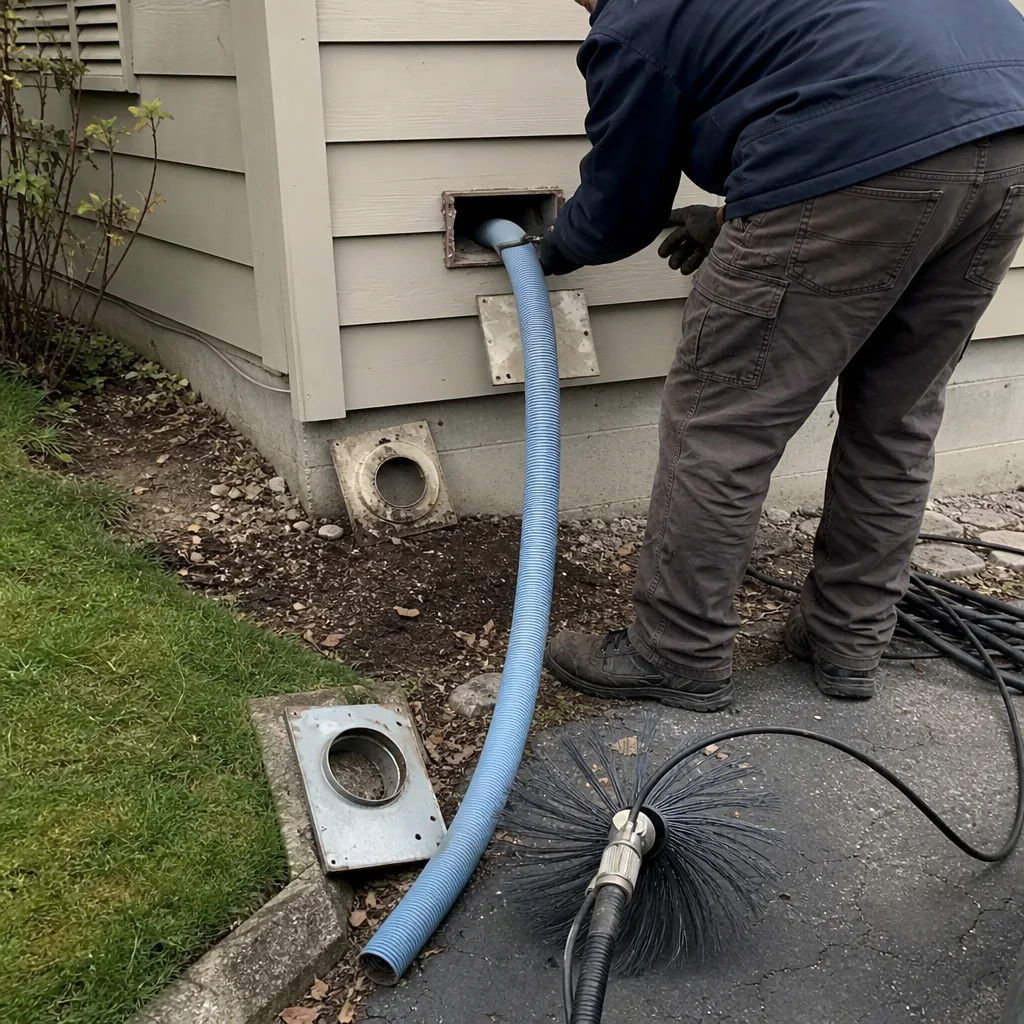 Before
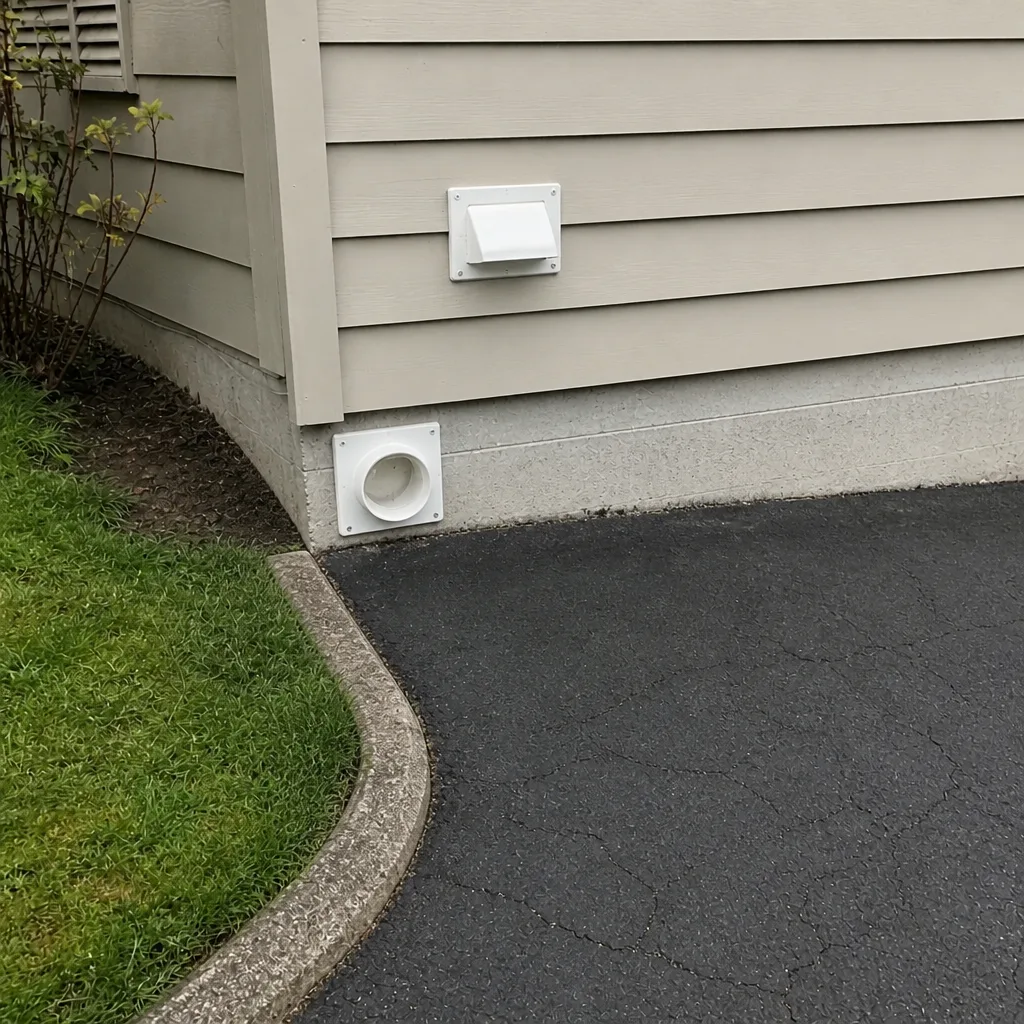 After
Frequently Asked Questions
Get an inspection once the smoke has cleared and the system has been off, ideally within a few weeks of the event. Residue that settles inside ductwork and on the air handler doesn’t clear on its own, and the longer it sits, the more it circulates with every cycle. Call (855) 812-5163 for an exact quote. Estimates are free.
We don’t quote per-vent or teaser prices, because the real range depends on the size of the system, the number of runs, the amount of contamination, and whether repair or sealing is needed. The honest answer is a whole-system estimate in writing before any work starts, with one flat price per system. That’s how you avoid the bait-and-switch layout that gives this industry a bad name. Call (855) 812-5163 for an exact quote. Estimates are free.
Yes. Mold can begin colonizing damp duct lining and insulation within 48 to 72 hours of water exposure, which is why flood-related duct damage needs inspection in that window rather than a week later. If any ductwork got wet, shut the system off and call for inspection before running it again.
Because they’re often not for the same job. A very low quote frequently covers a surface pass over the registers rather than the full system: no HEPA extraction, no inspection of duct runs, no repair of disconnected sections, and no sanitizing. Ask any provider what equipment they use and whether repair is in scope. Professional-grade equipment and a full-system scope cost more up front and cover the actual contamination. Call (855) 812-5163 for an honest estimate.
Ask for before-and-after photos of your own ducts, not stock images, plus a written scope of what was cleaned, repaired, or sealed. A provider who can show you the system as found and the system as left, with the repairs documented, has nothing to hide. That’s the record that also supports an insurance claim.
For most homes, every few years is a reasonable baseline, but waterfront-adjacent crawlspaces, heavy-pollen seasons, pets, and any smoke, flood, or outage event move the schedule up. If you’ve had a weather event in the past year, treat cleaning as due rather than optional. Call (855) 812-5163 for a system assessment and an exact quote. Estimates are free.
The Bottom Line
Every emergency in this guide has the same first move: stop the system from pulling contamination deeper in. Shut it off, seal the returns, document with photos, and get an inspection before you resume normal operation. Wildfire smoke leaves residue that a filter change won’t remove, floods give you 48 to 72 hours before mold starts, and outages can hide displaced sections and pest activity inside your ducts. Prepare now with sealed returns and a matched filter, and recovery afterward becomes a scheduled cleaning instead of a rebuild. That’s the difference a well-prepared system makes for a Kirkland home.
If you’ve had a smoke, flood, or storm event, or you want a pre-season inspection so the next one costs less to recover from, call Kirkland Air Duct Cleaning at (855) 812-5163 for a free estimate. We answer 24/7. Fast dispatch from 7am to 7pm, Sunday through Friday.
Written by the team at Kirkland Air Duct Cleaning.