
Last updated November 25, 2026
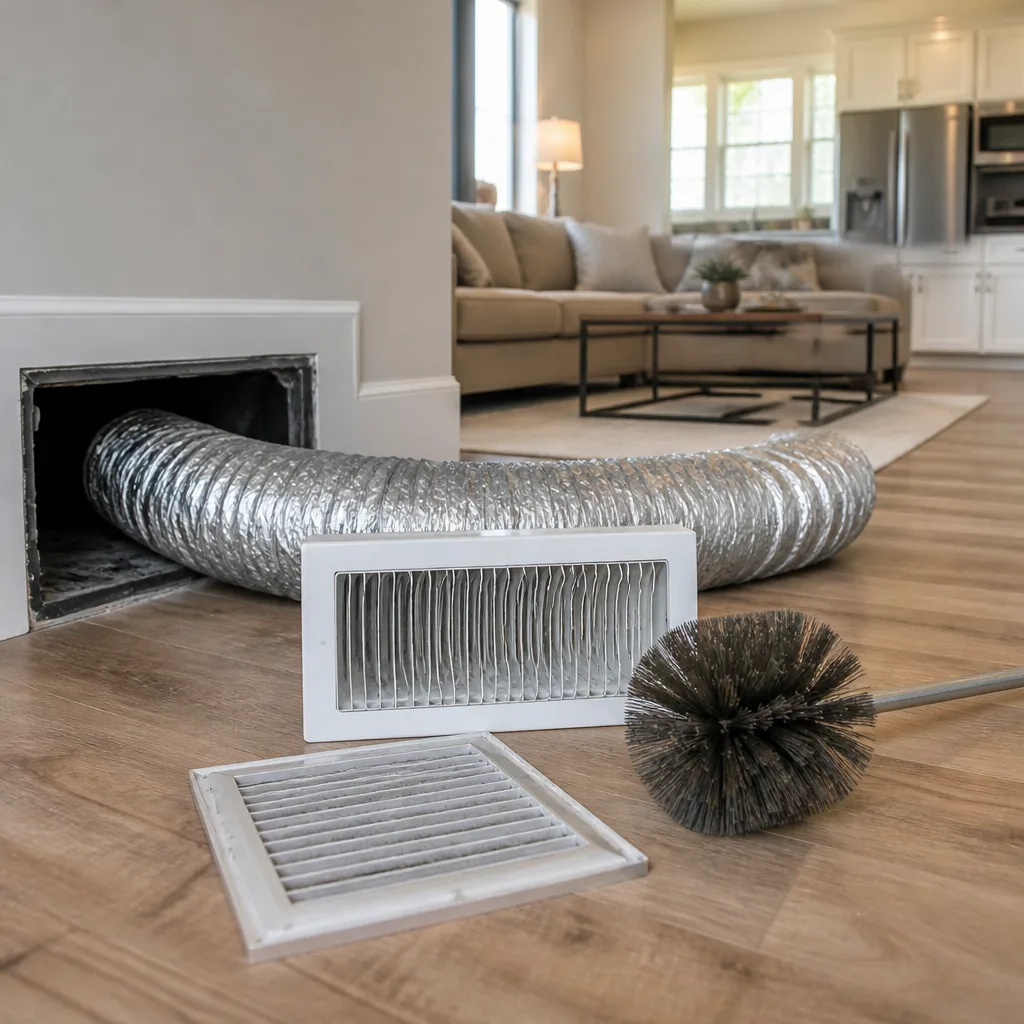 Whole-home duct cleaning
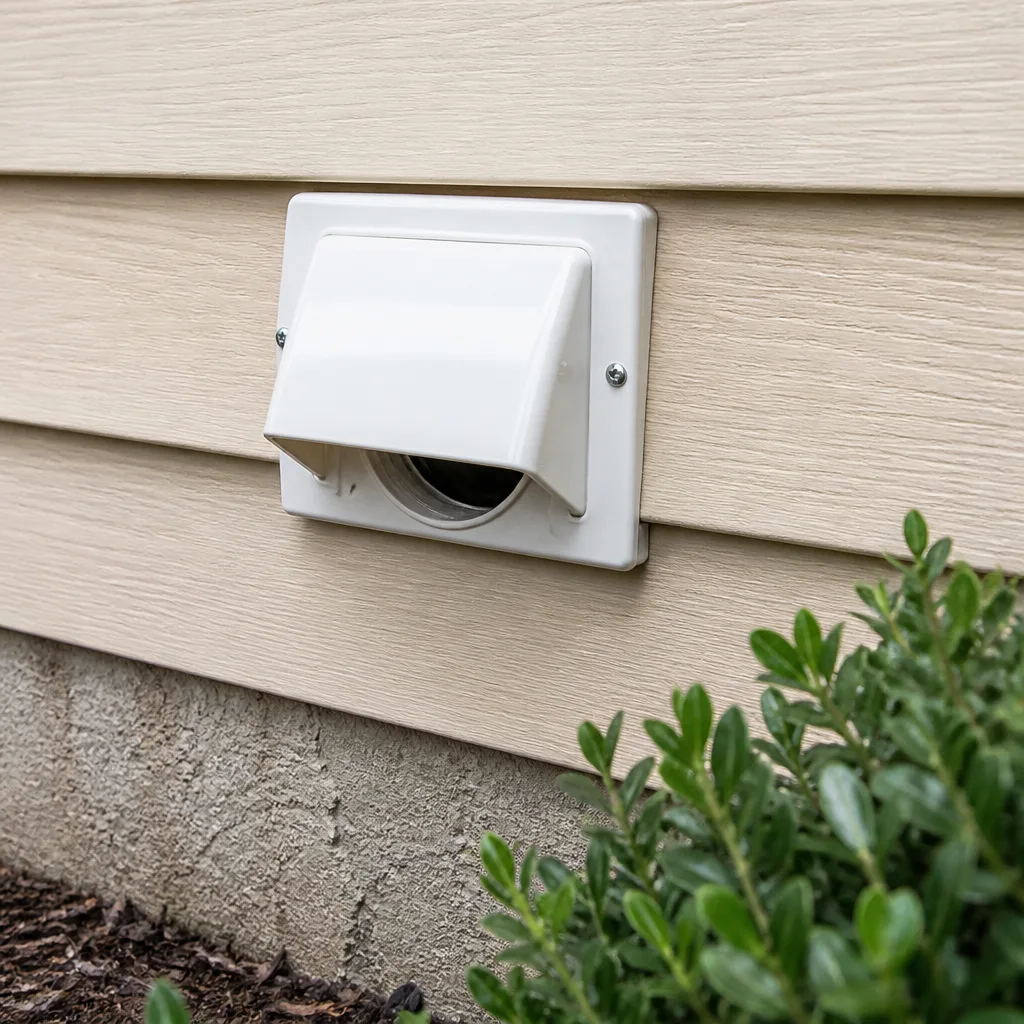 Dryer vent cleaning
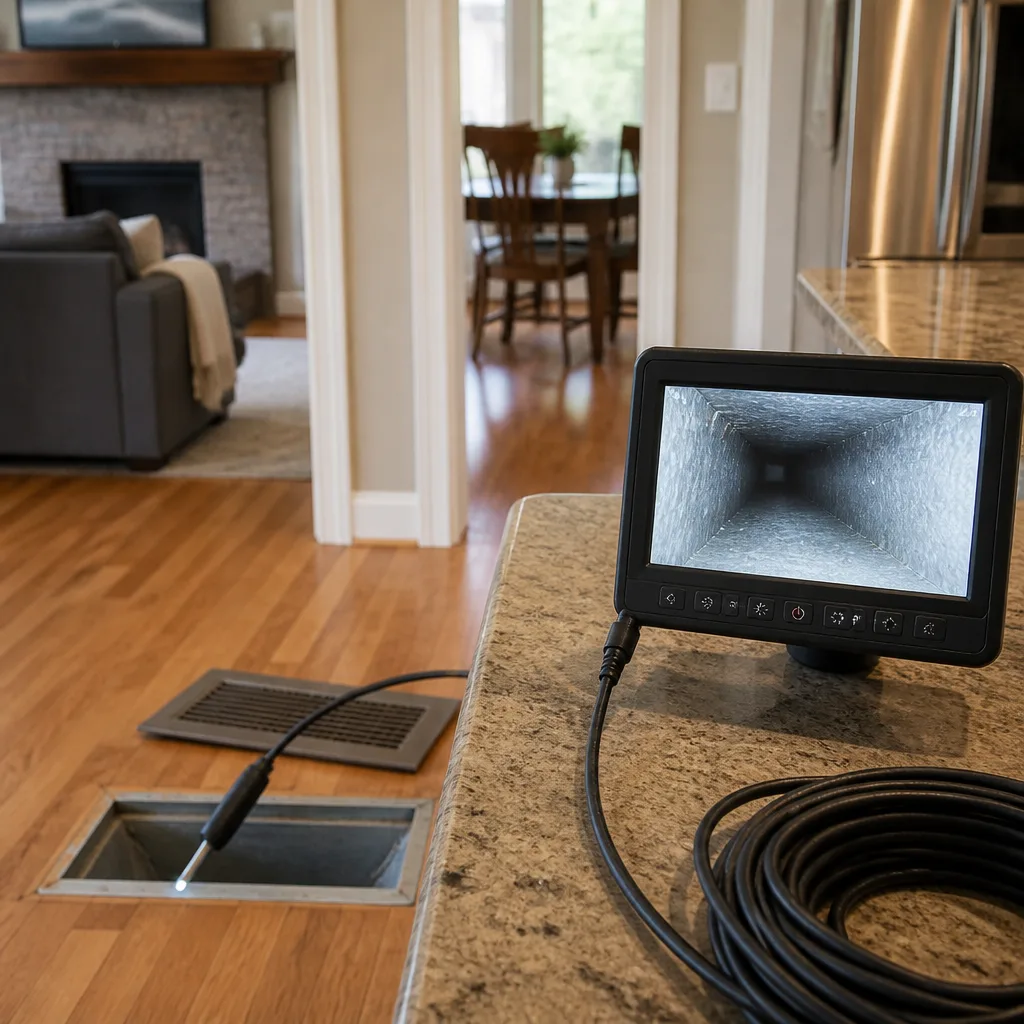 Camera inspection
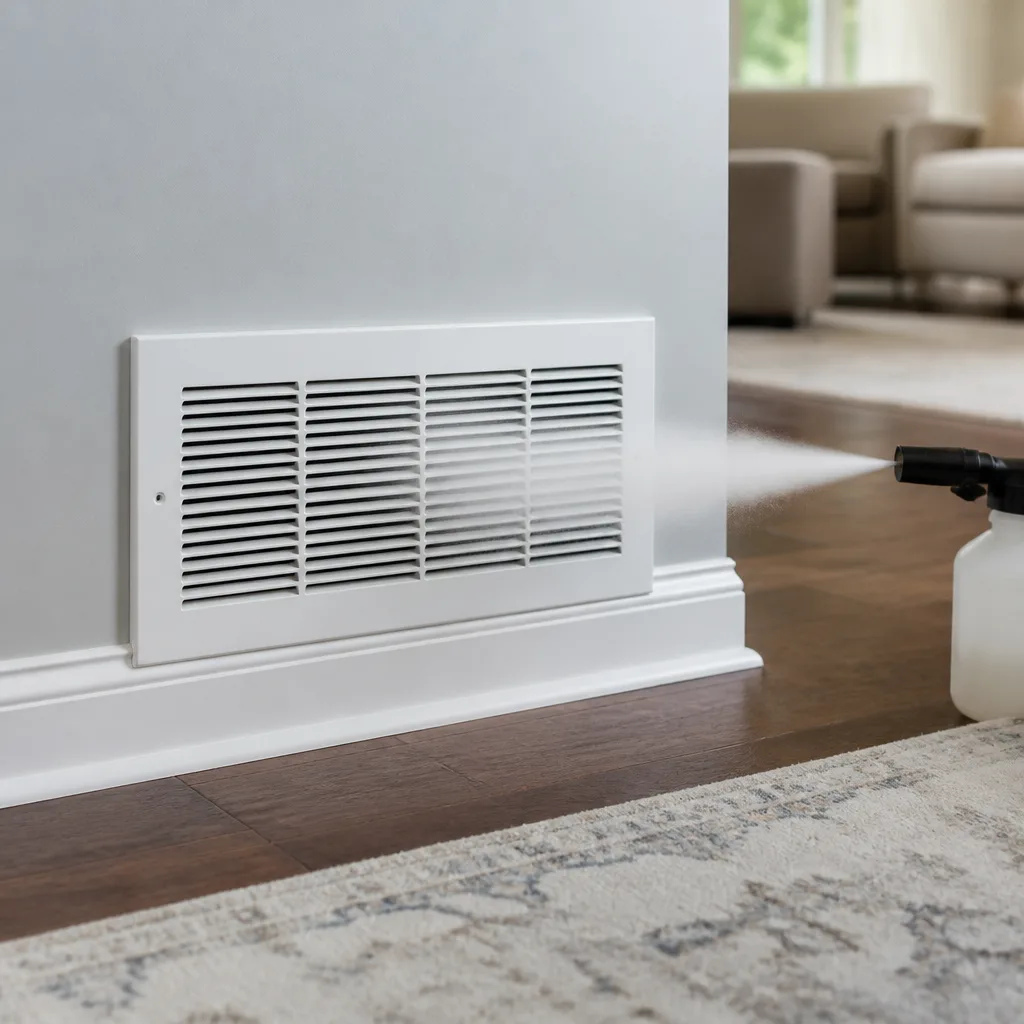 Sanitizing & deodorizing
Whole-system duct and dryer vent check with before-and-after photos - you see exactly what came out of your vents
That "$99 whole-house special" is a bait ad - the real number appears once they are in your hallway, or the "clean" is a shop-vac at the register. We photograph the inside of your ducts before and after instead.
Air Duct Cleaning Cost Breakdown: The Kirkland Homeowner’s Reference for 2026
The $99 air duct cleaning special in your mailbox is not a price. It’s a door opener. What it buys is a technician at your door with a vacuum hose and a script, and what usually follows is a series of add-on charges that push the final invoice several times higher than the number that got you on the phone. Legitimate duct work in Kirkland does cost real money, and there’s a direct relationship between what per-foot cleaning actually involves and what it costs. This guide breaks down the component pricing, the upsell landscape, and the total cost of ownership math so you can read a quote for what it is.
Quick Answer
Full-system air duct cleaning in Kirkland typically runs $450 to $1,200+ depending on system size, duct material, and access difficulty, while a single branch run or return may run $60 to $150 as a line item within a full-system job. A $99 offer is not a discounted version of that work. It’s a different job entirely, usually a main-trunk vacuum pass with per-vent add-ons presented before anything gets cleaned. The honest way to compare bids in Kirkland is scope for scope, not headline price for headline price.
Styles & brands we work with
- Whole-home duct cleaning
- Dryer vent cleaning
- Camera inspection
- Sanitizing & deodorizing
Table of Contents
- Per-Component Pricing for Kirkland Systems
- What Drives Price Variation: The Five Real Factors
- The Upsell Landscape: Which Add-Ons Are Worth It
- How to Get a Comparable Quote from Multiple Contractors
- Total Cost of Ownership: Cleaning Frequency and HVAC Lifespan
- Kirkland-Specific Context: Climate, Housing, and Duct Types
- When to Clean vs. When to Wait
- Common Mistakes to Avoid
Per-Component Pricing for Kirkland Systems
Air duct cleaning is priced by the linear foot of duct actually cleaned, plus component access. That’s the unit of work. Here’s what the Kirkland market looks like for each component when priced fairly.
- Main trunk lines: $150-$320 per system. These are the large supply and return trunks running from the air handler. They accumulate the most debris and take the longest to clean because of their cross-section and length.
- Branch runs (individual supply ducts to rooms): $45-$85 each. A typical Kirkland home has 8-14 branch runs feeding individual rooms. Multiply that out before comparing two quotes and you’ll see why a $99 offer can’t include them.
- Return runs: $50-$95 each. Returns pull air back through a filter that doesn’t catch everything. In older Kirkland housing stock, uncovered return plenums are a common source of dust re-entry.
- Air handler and blower compartment: $90-$180. This is often skipped on cheap quotes. If the blower isn’t cleaned, you can clean every duct in the system and the blower will redistribute the debris in a week.
- Dryer vent: $110-$190. Priced as a dedicated service, not a $20 add-on. See our dryer vent cleaning page for what the fire-safety scope involves.
- Sanitizing (optional): $75-$150 for a full-system application.
- Duct repair and sealing (if needed): $120-$400 depending on scope. This is not a cleaning charge; it’s remediation of physical failures we find during inspection.
For a 2,200 square foot home with 10 branch runs and 3 returns, a legitimate full-system job lands near $650-$850. That number is not inflated. It reflects roughly 3-4 hours of two-technician work with a rotary brush running every foot of the system and a HEPA vacuum holding negative pressure the whole time. When a bid comes in at $99 or $199, something has been removed from that scope. Ask what.
What Drives Price Variation: The Five Real Factors
Two Kirkland homes of similar square footage can legitimately price $200 apart. Here’s why, and why each factor is a genuine labor and equipment cost rather than a negotiation lever.
1. System size and duct footage
A 1,400 square foot cottage on the Eastside has fewer runs than a 3,000 square foot two-story with dual zones. Footage is the primary driver. Any quote that doesn’t itemize footage is a black box.
2. Duct material type
Sheet metal cleans fast. Flex duct cleans slower and requires lower brush speed to avoid abrasion and tearing, which adds time. Old rigid fiberglass duct board in mid-century Kirkland homes requires careful handling because the interior facing can break down if a technician gets aggressive. A company worth hiring will ask what duct material your home has before quoting.
3. Access difficulty
Runs buried above a finished ceiling, behind a knee wall, or under a low crawlspace take longer to reach and often require removing and resetting registers carefully. Access plates, in-line access holes, and register removal all add labor time. This is the factor most homeowners underestimate when comparing a low bid to a higher one.
4. System age and condition
Duct systems built before the 1980s were often constructed with interior seam tape that has since failed, or with disconnected joints from years of temperature cycling. Part of the job on older systems is inspection and repair before cleaning. If a contractor quotes the same price for a 1978 system and a 2019 system, they haven’t looked at the system.
5. Add-on scope
Sanitizing, coil cleaning, dryer vent, and duct sealing all add price. None should be mandatory. All should be optional line items presented after inspection, not before cleaning begins.
The Upsell Landscape: Which Add-Ons Are Worth It
Not every add-on is a scam. Some genuinely belong in a full-system job. Others are padding. Here’s how we distinguish them, and the conditions under which each one earns its place.
Worth it under specific conditions
- Sanitizing: Worth it after verified microbial growth, after water intrusion or flooding, after a rodent or pest issue, or after moving into a home with unknown history. Not worth it as a blanket add-on to every cleaning. Physical cleaning handles dust. Sanitizing handles what cleaning can’t fully reach. Using an Abatement Technologies filtration unit during sanitizing application is standard practice because it captures dislodged contaminants at the source rather than redistributing them.
- Coil cleaning: Worth it if the evaporator coil has visible debris buildup, if airflow has measurably dropped, or if the system runs frequently in summer. A dirty coil reduces cooling capacity and drives compressor load. On a system under ten years old with a clean filter history, this is often unnecessary.
- Duct sealing and repair: Worth it whenever it’s actually needed, and the “whenever” is the entire point. Disconnected joints and failed seam tape leak conditioned air into crawlspaces and wall cavities. This is not optional if found. It shows up on a $120-$400 line item because it takes real materials and time to fix.
- Dryer vent cleaning: Always worth it at the recommended interval. Lint accumulates in dryer vent ducting measurably faster than most people assume, and it is genuinely combustible. This is a fire-safety service, and treating it as one changes how you think about the interval.
Worth questioning
- UV light installation pitched mid-clean: A legitimate air-quality upgrade in some systems, but should be a separate conversation with product context, not a pressure pitch during a duct cleaning visit.
- Filter upgrades: A high-MERV filter (Honeywell and Aprilaire both make good ones) is worth considering, but only if your blower can handle the pressure drop. Over-restrictive filtration strains the air handler and can cause more problems than it solves. Ask about static pressure before upgrading the filter.
- Any add-on priced as a percentage of the base job: Real add-ons are priced by scope, not by multiplier.
How to Get a Comparable Quote from Multiple Contractors
Comparing headline prices between two duct cleaning quotes is meaningless because the scopes can differ by a factor of five. Here’s the checklist to get comparable quotes.
- Ask for a written scope, not a verbal price. It should list branch run count, return count, trunk linear footage, and whether the air handler is included.
- Require a pre-cleaning inspection. A legitimate bidder inspects the system and presents findings before quoting, or quotes a firm price after inspection.
- Ask what equipment they use. Rotary brush systems like Rotobrush paired with a HEPA vacuum system like Nikro are industry-standard for residential work. Consumer-grade vacuums and shop vacs are not equivalent. The equipment specification is part of the price.
- Confirm whether the quote includes the air handler and blower. If it doesn’t, add that in when comparing to a quote that does.
- Ask whether dryer vent is included or separate. Include it as a line item on both bids to come to an apples-to-apples total.
- Ask for before-and-after photos of the system being worked on. We provide this on every full-system job because it answers the question “was the work actually done?” without you needing to trust a verbal assurance.
- Never accept a quote with a same-day discount incentive. A price that only holds if you sign immediately is a pressure tactic, not a quote.
Bring these seven items to every call and you’ll be comparing like with like. If you’d like a written scope and estimate from us, see our air duct cleaning page or call (855) 812-5163. Estimates are free and pricing is one flat price per system agreed before any work starts.
Total Cost of Ownership: Cleaning Frequency and HVAC Lifespan
Duct cleaning isn’t a standalone cost. It sits inside the total cost of running your HVAC system, and the relationship is direct.
A dusty, debris-laden duct system restricts airflow. Restricted airflow means the air handler runs longer to move the same volume of air, which drives up electrical consumption and puts continuous extra load on the blower motor and, in cooling season, the compressor. Cleaning restores design airflow. That’s not a marketing claim; it’s a mechanical fact about fan curves and pressure drop. A system operating at its designed static pressure runs closer to its rated efficiency. A system running high-static because the ducts are loaded up runs below it.
On lifespan: the components most sensitive to continuous overload are the blower motor and the compressor. Neither fails suddenly. Both wear gradually under elevated runtime. Keeping ductwork clean, filters changed on schedule, and joints sealed keeps the system operating in its designed window.
The practical framing for a Kirkland homeowner:
- Cleaning interval: Most homes need duct cleaning every 3-5 years under normal conditions. Homes with pets, recent renovations, smokers, or allergy-sensitive occupants benefit from the shorter end of that range. Homes with new ductwork and a clean filter history can often wait longer.
- Cost per year of ownership: A $700 full-system cleaning every 4 years averages $175 per year. That’s less than a single service call for a failed component, and blower motor replacement is a substantially larger expense.
- Dryer vent interval: Annual for most households, more often with heavy laundry volume. This is not a comfort calculation. It’s fire safety.
- Air quality upgrades: A Honeywell or Aprilaire filter or air cleaner, added to the system after cleaning, has an ongoing filter-replacement cost. Budget for it annually.
Kirkland-Specific Context: Climate, Housing, and Duct Types
Kirkland’s climate affects what accumulates in ducts and how. The region’s wet winters mean indoor humidity is high for roughly five months of the year, and homes here tend toward tighter building envelopes to hold heat. That combination traps moisture and dust in the same enclosed spaces, which drives microbial growth risk in ductwork more than in arid climates. Houses on the Eastside that were built in the mid-20th century often still have their original duct systems, and those systems often carry interior fiberglass duct board, failed seam tape, and connective joints that have loosened with decades of seasonal expansion and contraction. Newer construction in Kirkland tends toward flex duct, which cleans differently. A technician who assumes every job is the same type of job is likely to damage the softer ducting or miss problems on the older systems.
Kirkland homes in neighborhoods like Bridle Trails, Houghton, and the Market area near downtown tend to have basements or crawlspaces with the air handler in one of them, which affects access. Homes closer to Juanita and Finn Hill frequently sit on sloped lots, which changes crawlspace and attic access in ways that extend cleaning time. None of these details are visible from a website quote form. They show up during the on-site assessment, and they’re the reason a legitimate estimate requires a real look before a firm price.
When to Clean vs. When to Wait
Not every homeowner needs duct cleaning right now. Here’s when it’s genuinely warranted and when it isn’t.
Clean now
- After a renovation that generated drywall dust, sawdust, or fiberglass particles.
- After moving into a home with unknown history, particularly one that sat vacant.
- After a pest issue, water intrusion, or fire in or near the structure.
- When visible dust is coming from supply registers after HVAC service, filter changes, or fan-on testing.
- When a household member has developed respiratory symptoms that a doctor has linked to the home environment.
- When the dryer is taking longer to dry clothes than it used to, or the exterior vent flap no longer opens fully during operation.
Probably wait
- Home under five years old with a clean filter history and no renovations.
- Ducts visibly clean at register inspection with no complaints about dust or airflow.
- No dryer vent concerns and no reno or pest history.
The dryer vent is the exception to most of the waiting rules. Annual dryer vent cleaning is a fire-safety baseline regardless of how new the home is. See our HVAC cleaning page for how the system-wide service differs from duct cleaning alone.
Common Mistakes to Avoid
- Comparing a base rate to a full-system price. A $99 coupon and an $850 full-system quote are not the same product, and treating them as comparable leads to either a very disappointing cheap job or an overpriced expensive one. Always compare scopes.
- Skipping the air handler. Cleaning branch runs and trunks without cleaning the air handler and blower compartment leaves a debris source that will redistribute throughout the clean system within a week or two. Confirm it’s included in every quote.
- Choosing the lowest bidder on a Kirkland home with original ductwork. Older systems need inspection and often repair before cleaning. A company that quotes without looking will either do the wrong work or present “surprise” findings once the truck is parked.
- Treating dryer vent cleaning as an add-on. It’s not a $20 add-on; it’s a dedicated fire-safety service that deserves real time and the right equipment. Confirm it’s priced as its own line item and actually performed.
- Buying air-quality upgrades before cleaning. Installing a new filter or air cleaner into a dirty system just gives the debris a new surface to accumulate on. Cleaning first, then evaluating upgrades, is the correct order.
- Not requesting before-and-after documentation. Photos of your own ductwork (not stock photos) are the simplest way to confirm work was done. Any reputable company provides them without being asked.
- Assuming cleaning “fixes” airflow problems. Cleaning removes debris, but if the real issue is disconnected ducts or crushed flex runs, cleaning won’t fix that. If airflow is your complaint, ask the company to inspect for repair needs, not just clean.
See the difference
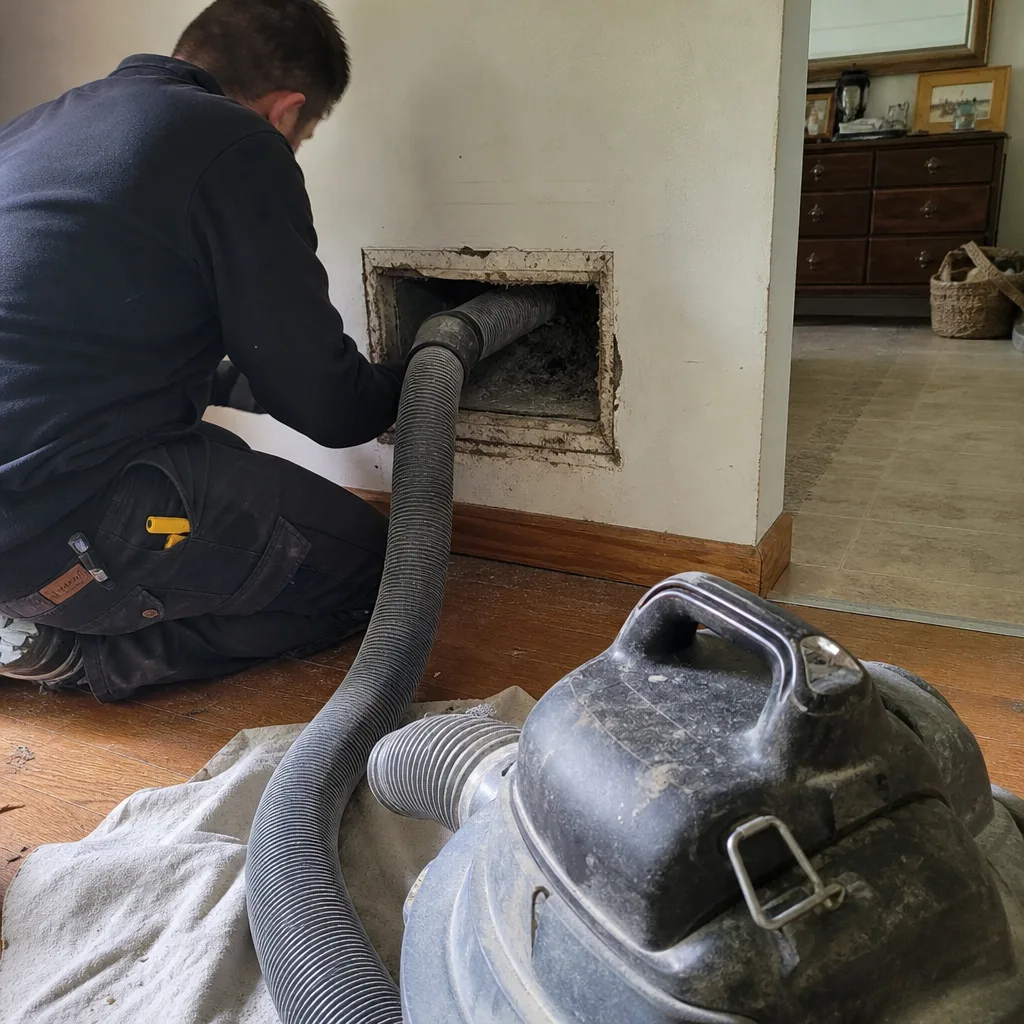 Before
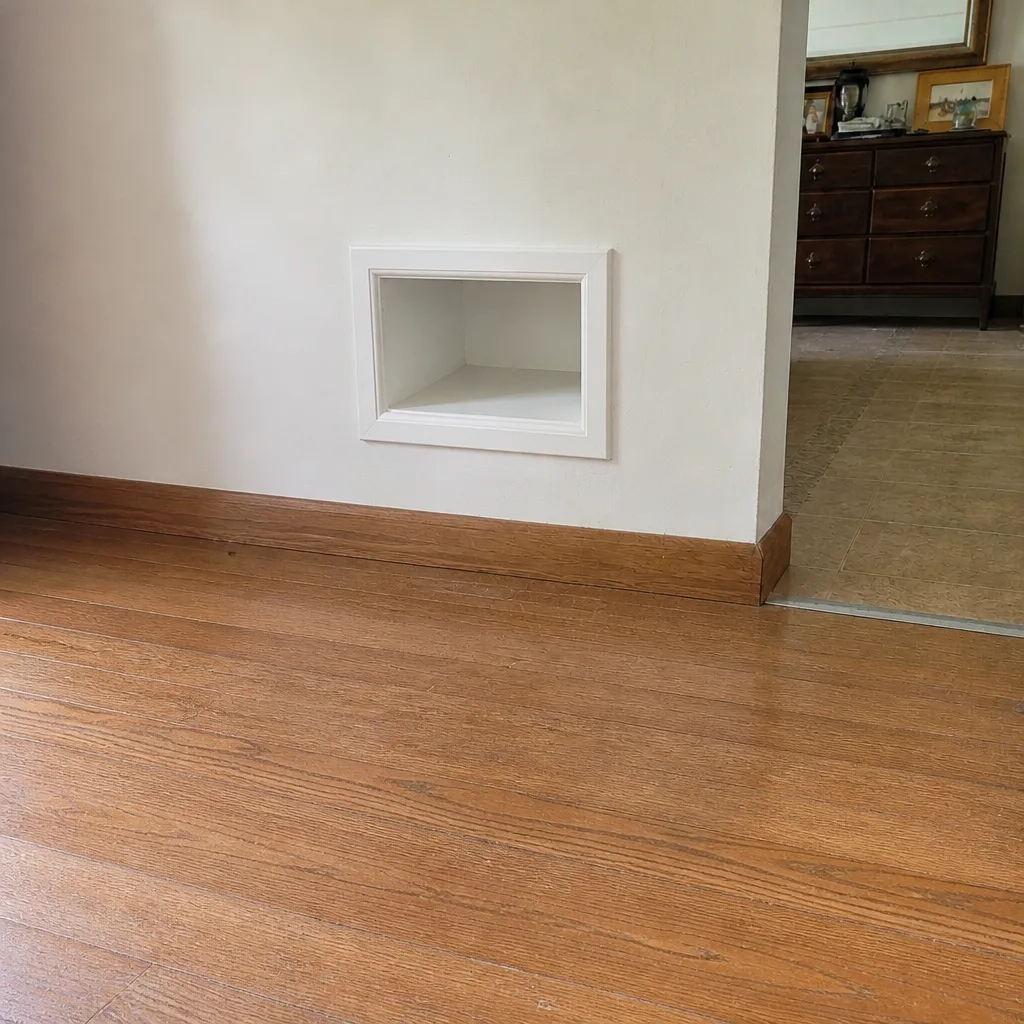 After
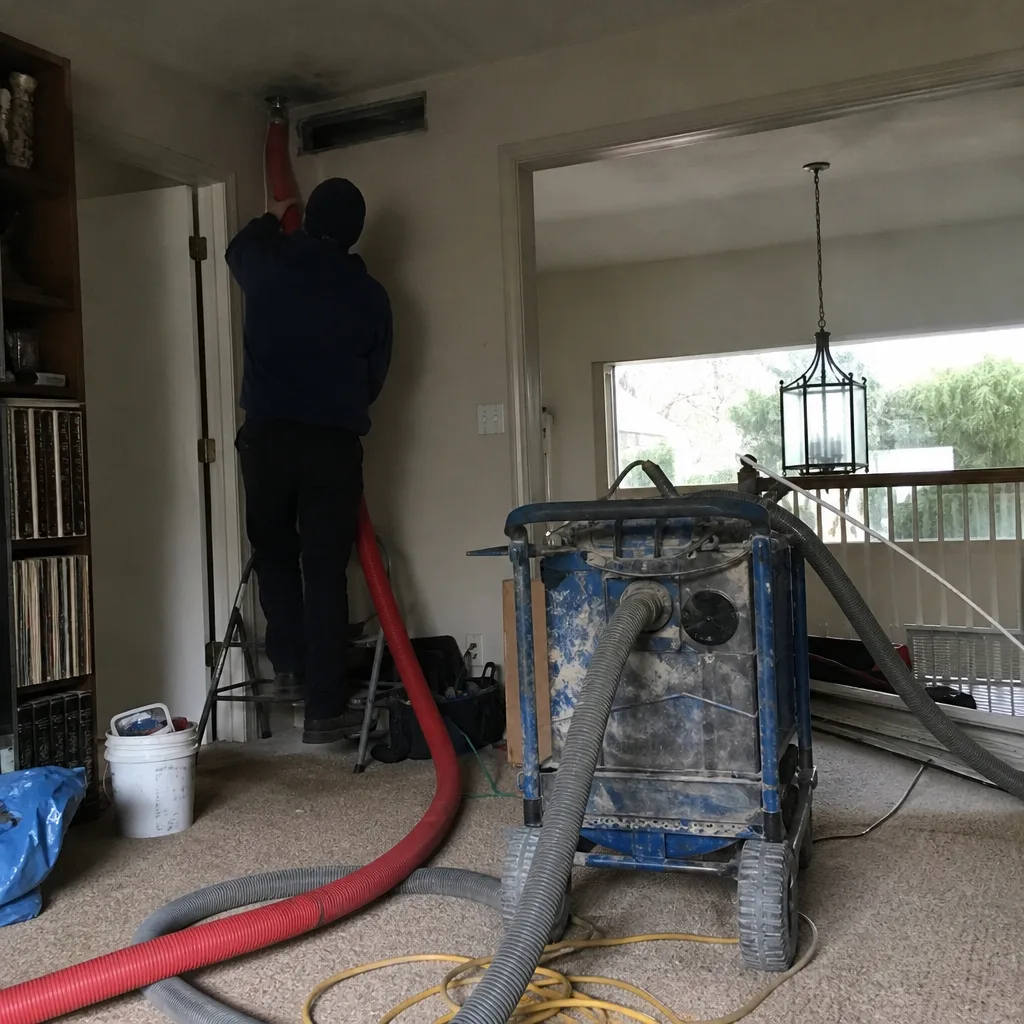 Before
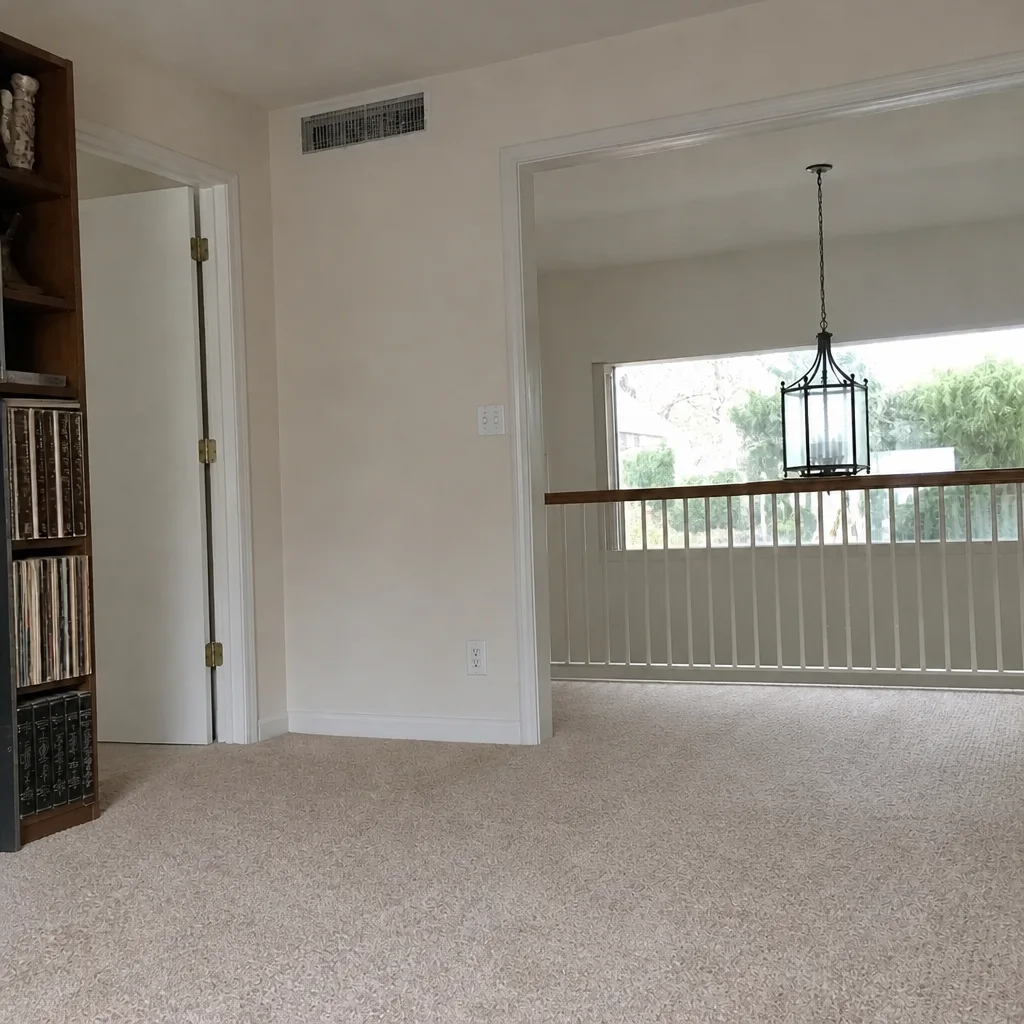 After
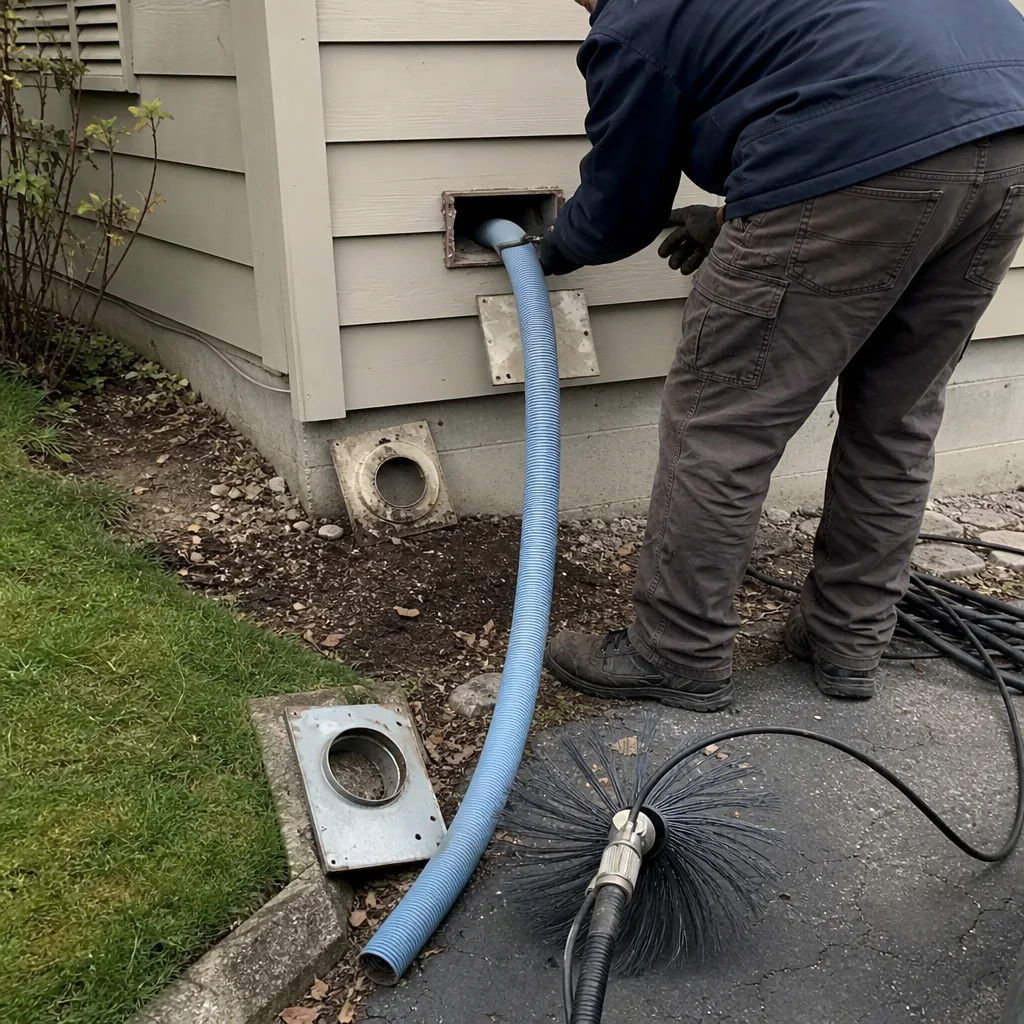 Before
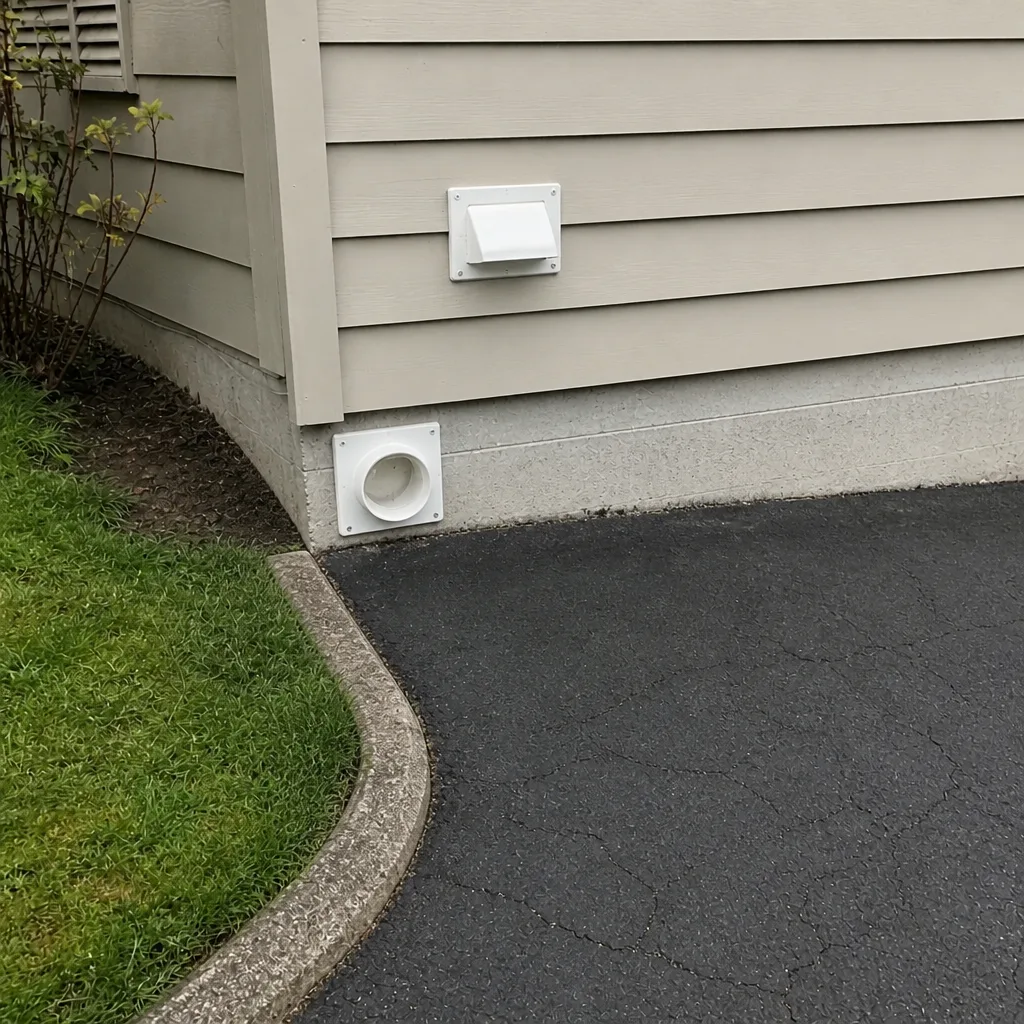 After
When to Call a Professional
Call a professional when you see visible debris or buildup at registers, when the dryer vent hasn’t been cleaned in over a year, when a renovation has just finished, when a new home purchase has unknown duct history, when someone in the household has respiratory concerns tied to the indoor environment, or when airflow has measurably dropped in a way that filter changes aren’t fixing. Also call if a previous cleaner quoted one price and delivered a different one – a proper scope and written estimate prevents a repeat. Our technicians have up to 11 years of experience and work with professional-grade equipment across cleaning, dryer vent, HVAC system cleaning, repair and sealing, and air-quality sanitizing, so a full-system assessment comes from one provider rather than a handoff. Kirkland Air Duct Cleaning offers free estimates in Kirkland – call (855) 812-5163. We answer 24/7, with fast dispatch from 7am to 7pm, Sunday through Friday.
Frequently Asked Questions
Most full-system air duct cleaning in Kirkland falls between $450 and $1,200 for a typical home, with larger or more complex systems running higher. A single-component job (for example, one branch run) may be $45-$85, but that’s not a full-system cleaning. Call (855) 812-5163 for an exact quote on your system – estimates are free.
Because they’re quoting a different job. A $99 offer typically covers a main-trunk vacuum pass only, with branch runs, returns, air handler, and dryer vent priced as add-ons once the technician is on site. A legitimate full-system bid itemizes what’s included per component so you can compare scopes rather than numbers. Call (855) 812-5163 and we’ll walk through a written scope with you – estimates are free.
Ask for before-and-after photos of your own ductwork, not stock photos. Any reputable company provides them on every full-system job without being asked. We provide photos on every cleaning because it removes the need to trust a verbal reassurance. Call (855) 812-5163 to schedule an estimate.
Every 3-5 years under normal conditions, sooner if you have pets, have recently renovated, or have allergy concerns in the household. The wet Kirkland climate keeps indoor humidity high through the winter, so ductwork in this region often accumulates more than homeowners expect. Dryer vents should be cleaned annually regardless. Call (855) 812-5163 for a free estimate on your system.
Yes, when the ducts are meaningfully loaded. Cleaning restores design airflow, which reduces the runtime and electrical load on the air handler and the compressor. On a system that’s already clean, the efficiency gain is small. On a system that’s been neglected, it’s measurable. The honest answer depends on inspection. Call (855) 812-5163 for a free estimate.
Only when there’s a specific reason: recent water intrusion, pest issues, visible microbial growth at registers, or a home purchase with unknown history. It’s not necessary on every cleaning. When it is warranted, we use professional air-filtration equipment (Abatement Technologies units) to capture dislodged contaminants during application. Call (855) 812-5163 to discuss whether it fits your situation – estimates are free.
The Bottom Line
Air duct cleaning in Kirkland ranges from $99 to over $1,200 because those prices don’t buy the same thing. Real full-system cleaning is priced by duct footage, component access, duct material, and repair needs, and a fair full-system job for a typical Kirkland home runs $450-$1,200 with the air handler included. Add-ons are only worth the money when there’s a specific reason for them, not as default upsells. Dryer vent cleaning is a separate fire-safety service that should be on an annual schedule. The way to get a fair price is to compare scopes line-item by line-item, ask for before-and-after photos, and treat any quote that can’t itemize its own work as a warning sign. That’s the whole of the cost breakdown, and it’s the same math a legitimate provider runs for you in a written estimate.
Kirkland Air Duct Cleaning offers free estimates and one flat price per system agreed before work begins. Call (855) 812-5163. We answer 24/7. Fast dispatch from 7am to 7pm, Sunday through Friday. You can also start with our Kirkland Air Duct Cleaning home page.
Written by the team at Kirkland Air Duct Cleaning.